buying-guide · low-voltage · solar
Low-Voltage vs. Solar Landscape Lighting: What Lasts in Seattle Weather
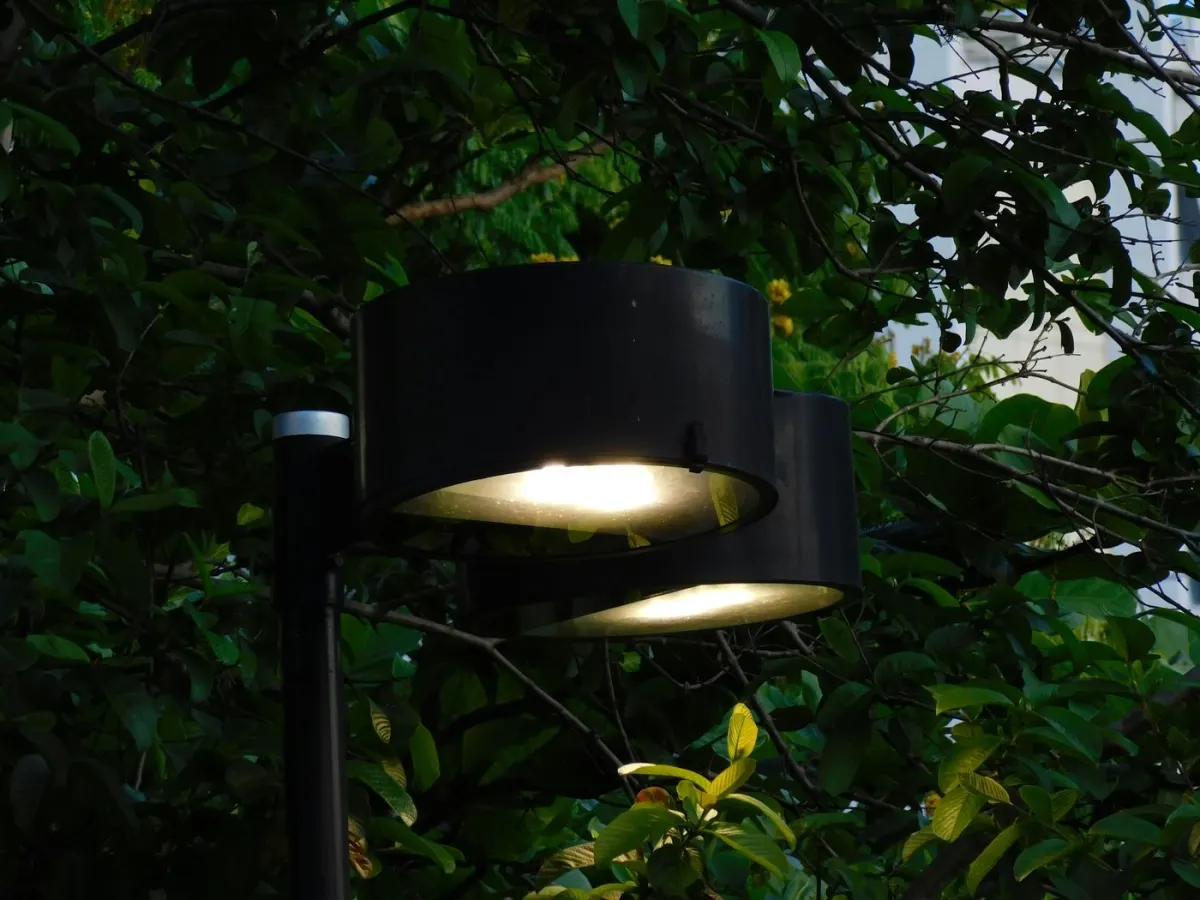
Every spring, we get a version of the same call: a homeowner installed a box of solar path lights from a hardware store two summers ago, and now half of them don’t turn on, and the ones that do barely glow. They want to know if landscape lighting is just not worth it.
It usually is. The fixtures just weren’t the right ones for this climate. Here’s an honest comparison of low-voltage and solar landscape lighting, specifically for Seattle-area weather, not the sunny-climate marketing photos most solar lights are sold with.
The Short Answer
Low-voltage lighting, wired to a transformer, is the only system we install professionally, and it’s what we recommend for anyone who wants their lighting to still look good in three years. Solar lights have a place — they’re fine for a low-commitment accent on a shed or a rarely-used side path — but they’re not a substitute for a real system, especially here.
The reasons come down to two things Seattle has in abundance: short winter daylight and long stretches without direct sun.
How Each System Actually Works
Low-voltage systems run 12-volt wiring from a transformer, usually mounted near a garage or exterior outlet, out to each fixture. The transformer steps down household current, and a timer or photocell controls when the lights come on. Because the fixtures are wired, they draw consistent power regardless of weather, season, or how much direct sun a spot gets during the day.
Solar lights have a small photovoltaic panel built into the fixture, which charges an internal battery during the day. That stored charge powers an LED at night. No wiring, no transformer, no electrician — which is exactly why they’re appealing for a quick DIY project.
Where Solar Lights Struggle Here
The problem isn’t the technology. It’s the mismatch between how solar lights are designed to work and the light Seattle actually gets for roughly half the year.
Short winter days mean less charging time. In December, Seattle gets under nine hours of daylight, and much of that is overcast. A solar panel needs several hours of reasonably direct light to fully charge a battery. On a gray January day, most consumer solar fixtures never get there, so the battery runs low or empty by early evening — right when you actually want the light on.
Tree and building shade compounds the problem. Landscape lighting is often placed near trees, under eaves, or along shaded walkways — exactly where a solar panel gets the least sun. The fixtures that need light most (a shaded entry path, for instance) are frequently in the worst position to generate it.
Batteries degrade faster in cold, damp conditions. The small rechargeable batteries in most solar fixtures have a shorter usable life in cold, wet climates than in dry ones. Two winters is a common lifespan before a battery holds a noticeably weaker charge, even before the LED or panel fails.
Moisture intrusion is a real failure mode. Budget solar fixtures are rarely sealed as well as wired low-voltage fixtures, since the entire electronics package — panel, battery, and circuit board — sits exposed in the fixture housing. In a climate with this much rain, that’s a lot of opportunity for water to get somewhere it shouldn’t.
Where Low-Voltage Systems Hold Up Better
Consistent output, regardless of weather. A wired system doesn’t care if the last three days were sunny or gray. It draws power on a timer or photocell schedule and performs the same in July and January.
Sealed, purpose-built fixtures. Professional-grade low-voltage fixtures are built with weatherproof housings rated for direct burial and constant outdoor exposure, and don’t have batteries to degrade. That’s part of why we can back an install with a 5-year fixture warranty — there’s a lot less to fail.
Real brightness and beam control. Wired fixtures can be specified by lumen output and beam angle to actually achieve a design intent — a tight uplight on a tree trunk, a wide wash across a facade. Most solar fixtures run a single small LED with limited brightness and no beam control, which limits what they can actually accomplish in a real design.
Longevity that matches the investment. A well-installed low-voltage system, properly maintained, commonly runs 15-20 years before major component replacement. See our full breakdown in how long LED landscape lights actually last.
Cost Over Time, Not Just on Day One
Solar fixtures win on sticker price. A pack of solar path lights costs a fraction of what a wired system runs per fixture, and there’s no installation labor. But that comparison only holds if you stop counting after the first purchase.
Consumer solar fixtures commonly need battery or full-unit replacement every one to three years in our climate, since the battery is usually not user-replaceable and the whole fixture gets tossed. Multiply that by a dozen fixtures along a path, and the “cheaper” option starts costing real money again every couple of winters, plus the time spent noticing which ones died and replacing them.
A wired low-voltage system costs more upfront, but the ongoing cost is closer to zero for years, aside from the occasional bulb. Add a maintenance plan and even bulb swaps are handled proactively, before you notice a fixture went dark. Over a ten-year horizon, the total cost of ownership for a quality low-voltage system is often comparable to or lower than continually replacing failed solar fixtures — and it looks better the entire time, instead of gradually dimming as batteries age.
What About “Premium” Solar Fixtures?
It’s worth acknowledging that not all solar lighting is the cheap hardware-store variety. Higher-end solar fixtures with larger panels and better batteries exist, and they perform meaningfully better than the bargain bin. If you’re set on a solar-only approach, spending more on the fixture itself will get you closer to a usable result.
Even then, the fundamental limitation doesn’t change: a solar fixture is only as reliable as the sunlight reaching its panel, and a Seattle winter doesn’t offer much of that. A premium solar fixture in a shaded spot will still underperform a basic wired fixture in the same location, because the constraint is sunlight, not fixture quality.
When Solar Actually Makes Sense
We’re not against solar lighting everywhere. It’s a reasonable choice for:
- A rarely-used side yard or shed where running wire isn’t practical
- A rental property where a permanent system isn’t worth the investment
- Marking a boundary or driveway edge where subtle, low-commitment light is enough
- Testing where you might want lighting before committing to a full design
If you’re using solar in one of these lower-stakes spots while planning a real system for the front of the house, that’s a reasonable way to phase a project. Just budget for it as what it is — a temporary or supplemental fixture, not a foundation.
The Bottom Line for Eastside Homes
If you want landscape lighting that looks the same in month one and year five, wired low-voltage is the only system worth designing around in this climate. Solar has genuine uses, but “no wiring required” is a trade-off, not a free upgrade — you’re trading reliability and brightness for convenience, and in a climate with this little winter sun, that trade rarely pays off where it matters most.
If you’re deciding between the two for an upcoming project, a free dusk consultation is the fastest way to find out what a properly designed low-voltage system would actually cost for your property, and where a solar accent might reasonably fill a gap.